 blog
Best Physical Therapy for Athletes: A 2026 Guide
Table of Contents
- What Makes Physical Therapy Effective for Athletes
- Common Sports Injuries and How Physical Therapy Addresses Them
- How to Choose a Sports Physical Therapist
- Sports Injury Rehabilitation: Assessment, Treatment, and Progression
- Return-to-Sport Physical Therapy: Planning Your Comeback
- How Long Does Sports Physical Therapy Take
- Addressing Athlete Concerns: One-on-One Care and Anxiety Management
- Frequently Asked Questions
Last Updated: October 19, 2026
What Makes Physical Therapy Effective for Athletes
Physical therapy for athletes is specialized rehabilitation designed to treat sports-related injuries and restore peak performance. At ABC Physical Therapy Cares, we combine injury assessment, targeted therapeutic exercises, and personalized recovery planning in one-on-one care built around athletes' demands.
The key difference is precision. A sprained ankle in a recreational jogger needs different treatment than the same injury in a competitive soccer player.
Effective physical therapy for athletes rests on three pillars. First, accurate diagnosis through functional testing and movement assessment.
Recovery isn't just about pain relief. It's about restoring function. An athlete who completes therapy but can't move explosively hasn't truly recovered.
Common Sports Injuries and How Physical Therapy Addresses Them
Athletes face predictable injury patterns. Runners develop knee pain. Baseball players strain shoulders and elbows. Soccer athletes tear ligaments. Football linemen suffer back injuries. Each injury requires tailored rehabilitation.
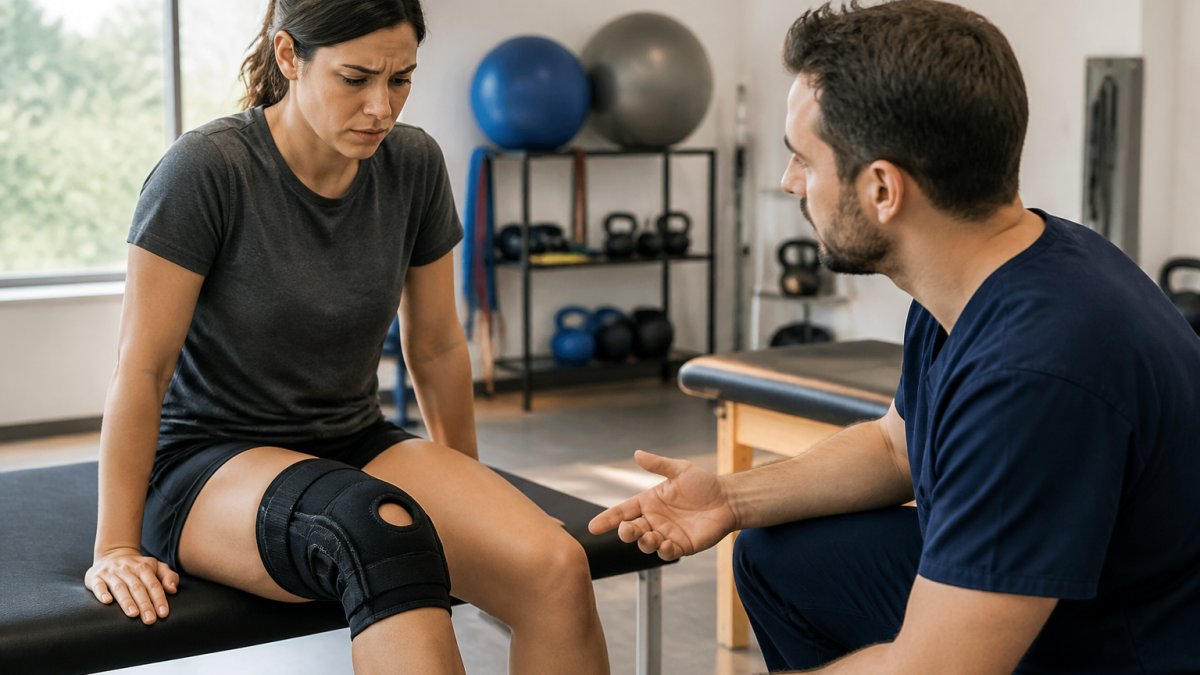
Knee injuries are the most common sports complaint, ranging from patellar tendinitis (jumper's knee) to ACL tears. Physical therapy addresses them through:
- Joint mobilization to restore normal tracking
- Quad and hip strengthening to reduce strain
- Proprioceptive training to improve stability
Shoulder injuries plague overhead athletes. Rotator cuff strains, impingement, and labral damage sideline pitchers and tennis players. Treatment focuses on:
- Restoring shoulder blade stability
- Improving thoracic spine mobility
- Strengthening rotator cuff muscles
Ankle sprains seem minor but linger without proper rehabilitation, leaving athletes vulnerable to re-injury. Effective therapy includes:
- Ankle mobilization and soft tissue work
- Proprioceptive balance training
- Calf and peroneal strengthening
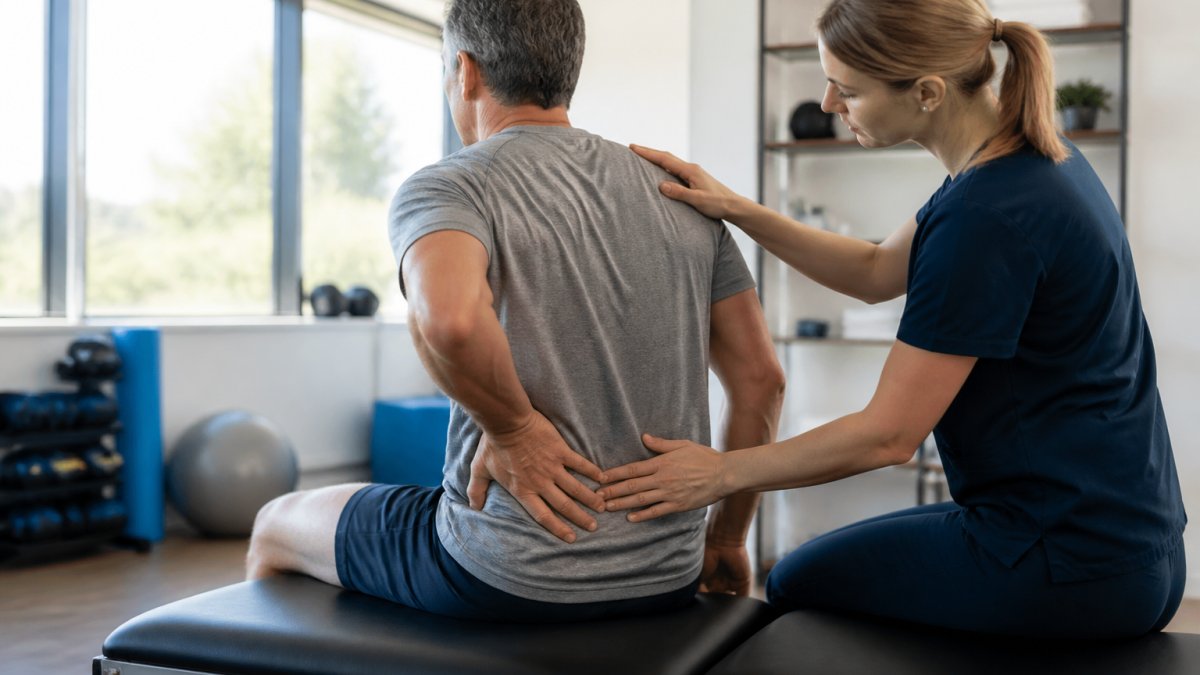
Back injuries affect athletes across sports, driven by poor movement patterns, muscle imbalances, and inadequate core stability. Physical therapy addresses the root causes:
- Core stabilization exercises
- Hip and thoracic mobility work
- Posture and movement retraining
The common thread: identify what caused the injury, fix the underlying problem, and rebuild the athlete's capacity to perform the sport safely.
How to Choose a Sports Physical Therapist
Not all physical therapists specialize in sports rehabilitation. The wrong provider wastes time and money.
Look for specific credentials. Ask whether the therapist holds a sports physical therapy specialization.
Evaluate their experience. How long have they worked with athletes, and have they treated your specific sport or injury?
Ask about one-on-one care. Some clinics see multiple patients simultaneously. That model doesn't work for sports rehabilitation.
A Practical Evaluation Checklist
Use this checklist when comparing providers, and ask for specifics rather than general claims.
- Sports-specific credentialing: Does the therapist hold a sports clinical specialization or athletic training credential? Ask which continuing education courses they've completed in the last two years.
- Sport and level experience: Can they describe athletes they've treated in your sport at your competitive level? Ask for a representative case and the milestones used.
- Objective testing: Do they use functional movement screens, strength testing (for example, handheld dynamometry), and sport-specific tests before and after treatment? Ask how they document progress.
Questions to Ask Before You Book
Bring these questions to the first call or visit. The answers reveal whether the practice is built for athletes or general rehabilitation.
- Who will treat me, and will I see the same therapist each visit?
- What assessments will you run at the first visit, and when will we re-test?
- What are the criteria for advancing to the next phase and for return to sport?
- How do you communicate with my coach or athletic trainer?
- What is the typical visit frequency and total course of care for my injury?
- What is my estimated out-of-pocket cost per visit and for the full episode of care?
Cost, Insurance, and Access
Cost is part of the decision. Pricing depends on quantity, dates, and delivery. Ask for a written estimate before starting care.
- Insurance: Confirm in-network status for your specific plan. Ask whether the practice verifies benefits and provides a good-faith estimate of patient responsibility.
- Referral rules: Some plans require a physician referral; others allow direct access to physical therapy. Confirm your plan's rules before your first visit.
- Visit cost: Request the cost of the initial evaluation separately from follow-up visits.
- Course-of-care cost: Multiply the expected visit count by the per-visit cost and add any testing or equipment fees.
Match the Provider to Your Sport and Level
Use your sport and competitive level to narrow the list. A recreational runner and a collegiate soccer player need different testing and progression.
- Endurance athletes: Look for experience with load management, running gait analysis, and return-to-run criteria.
- Overhead athletes: Ask about throwing or serving programs and shoulder testing.
- Team-sport athletes: Ask about change-of-direction testing, agility drills, and coordination with coaches.
- Masters and returning athletes: Ask how they adjust progression for age, training history, and prior injuries.
A provider who can describe the tests, milestones, and communication plan for your situation is a stronger match than one who only lists sports on a website.
Sports Injury Rehabilitation: Assessment, Treatment, and Progression
Effective rehabilitation follows a logical sequence: accurate assessment, targeted treatment, then progression toward sport-specific function.
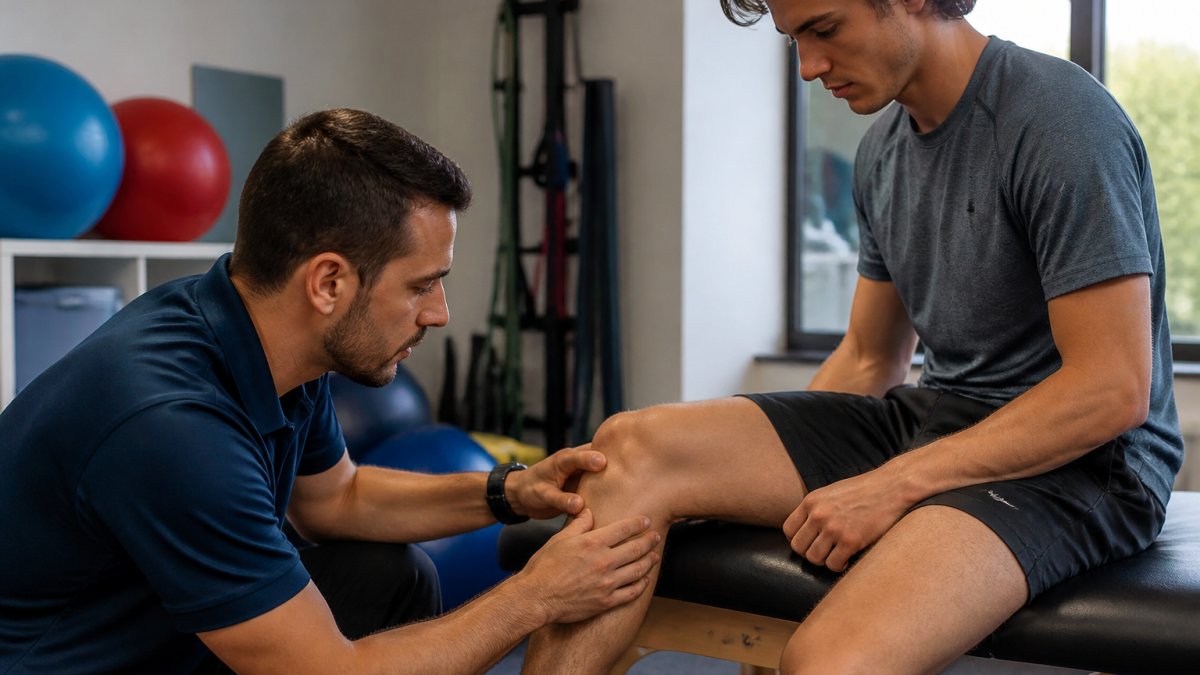
A complete assessment includes:
- Patient history and activity level
- Orthopedic testing and functional movement screening
- Manual palpation to identify restricted joints or tight muscles
- Sport-specific movement analysis
Treatment addresses the root cause. Once you understand the problem, you fix it through:
- Manual therapy: joint mobilization, myofascial release, trigger point therapy
- Therapeutic exercise: targeted strengthening and mobility work
- Soft tissue work to address restrictions
- Pain management strategies
Progression is structured. You don't jump from pain management to sport-specific drills. The path typically follows:
- Reduce pain and restore basic mobility
- Build foundational strength and stability
- Increase strength and power
- Add sport-specific movements and speed
- Return to sport with confidence
Each phase builds on the previous one. Rushing leads to re-injury; staying too long delays return. The therapist adjusts the timeline based on your progress.
Return-to-Sport Physical Therapy: Planning Your Comeback
Return-to-sport planning separates good rehabilitation from great. Being pain-free isn't enough, you need to be ready for the demands of your sport.
Click Here To Download Patient Information →
Establish clear return-to-sport criteria. Before you return, you should demonstrate:
- Pain-free movement through full range of motion
- Strength equal to the uninjured side (usually 90% or better)
- Sport-specific power and agility
- Confidence performing sport-specific movements
Don't rely on how you feel. Objective testing prevents premature return and re-injury.
Progress through sport-specific training. The final phase mimics your sport, including:
- Sport-specific movements at increasing intensity
- Agility and cutting drills
- Sport-specific endurance work
- Competitive scenarios and game-speed drills
Plan your return timeline. Return-to-sport doesn't happen on a set calendar; it happens when you meet the criteria.
Communicate with your coach. Your therapist and coach should agree on your readiness.
How Long Does Sports Physical Therapy Take
Athletes want timelines. Unfortunately, there's no universal answer.
Moderate injuries, significant sprains, muscle strains, or tendinitis, typically require 4 to 8 weeks.
Severe injuries, ACL tears, significant fractures, major labral damage, demand 3 to 6 months or longer.
What affects your timeline:
- Injury severity: A grade 1 ankle sprain heals faster than a grade 3
- Your age: Younger athletes often recover faster
- Your fitness level: Athletes in good condition typically progress quicker
- Your compliance: Consistent therapy and home exercises accelerate recovery
Don't compare your recovery to another athlete's. Their injury might look similar but differ in important ways.
The key: focus on meeting return-to-sport criteria, not hitting a calendar date.
Evidence-Based Milestones and Return-to-Play Criteria
Timelines are estimates; criteria are the gate. Ask your therapist to define the tests you must pass before advancing each phase and before returning to sport.
- Phase 1, Pain and mobility: Pain-free range of motion and minimal swelling. Re-test range of motion and basic strength at each visit.
- Phase 2, Strength and stability: Strength within about 90% of the uninjured side on objective testing, plus good movement quality on functional tests.
- Phase 3, Power and sport-specific function: Sport-specific tests such as hop tests, change-of-direction drills, or throwing programs at increasing intensity, with symmetry and technique standards set by your therapist.
- Phase 4, Return to sport: Clearance based on a combination of strength, sport-specific testing, and confidence, not on time alone.
How Timelines Vary by Injury and Sport
Use these patterns to set expectations, then confirm with your therapist.
- Ankle sprains: Simple sprains often resolve in weeks, but return to cutting and jumping requires balance and strength testing. High-demand court and field sports take longer than straight-line running.
- Knee injuries: Recovery depends on whether surgery is involved and on strength and hop-test symmetry. Return to pivoting sports requires sport-specific testing.
- Shoulder injuries: Overhead athletes need a throwing or serving progression with interval-based increases. Rushing the throwing progression is a common cause of setbacks.
- Back injuries: Core stability and movement retraining take time. Return to lifting or contact sports depends on pain-free loading and movement quality.
What to Track and Ask at Each Visit
- Re-test dates: Ask when strength, range of motion, and sport-specific tests will be repeated.
- Written criteria: Request the criteria for advancing phases and for return to sport.
- Home program adherence: Ask how home exercises are progressed and how adherence is reviewed.
- Communication with coaches: Confirm how the therapist will share readiness updates with your coach or athletic trainer.
A clear plan with objective milestones makes the timeline more predictable and reduces the risk of returning too soon.
Addressing Athlete Concerns: One-on-One Care and Anxiety Management
Many athletes arrive at physical therapy with concerns beyond the physical injury. Some fear re-injury.
One-on-one care builds confidence. When you see the same therapist consistently, they understand your injury deeply.
At ABC Physical Therapy Cares, we treat one patient at a time. You're not competing for the therapist's attention.
Anxiety about movement is common. An athlete who suffered a serious injury may fear that certain movements will cause re-injury.
Effective anxiety management includes:
- Explaining why specific movements are safe
- Progressing gradually to build confidence
- Demonstrating movements yourself before asking the athlete to try
- Celebrating small victories to build momentum
Returning to sport after injury is possible. If you're recovering from a sports injury and want to get back to competition, reach out to learn how our approach can accelerate your return-to-sport timeline. Click Here To Download Patient Information to get started.
Frequently Asked Questions
What credentials and experience should I look for in a sports physical therapist?
Look for a licensed physical therapist (PT) with a Bachelor of Science in Physical Therapy from an accredited program. Many sports-focused therapists hold additional certifications such as sports medicine specialization through the American Physical Therapy Association (APTA). Ask about their experience treating your specific sport and injury type, and verify they use evidence-based manual therapy techniques including joint mobilization and myofascial release. Experience with athletes at your skill level, recreational, collegiate, or competitive, matters significantly.
How does return-to-sport physical therapy differ from general physical therapy?
Return-to-sport physical therapy is specifically designed to get you back to your sport at full capacity, not just pain-free. It includes sport-specific movement patterns, position-specific conditioning, and functional testing to confirm you're ready for competition. A sports-focused approach incorporates plyometrics, agility drills, and sport-specific scenarios alongside traditional strength and mobility work. Your therapist should establish clear return-to-play criteria based on strength testing, range of motion, and functional performance, not just how you feel.
Will one-on-one physical therapy actually make a difference compared to group sessions?
Yes. One-on-one treatment allows your therapist to focus entirely on your movement patterns, pain response, and individual limitations. This personalized attention means your treatment plan adapts in real time based on how your body responds, manual therapy techniques are applied precisely to your needs, and progression happens at the right pace for your recovery. Group or high-volume clinic settings often limit the time spent on assessment and hands-on treatment, which can slow progress and miss important movement compensations that lead to re-injury.
How long should I expect sports physical therapy to take before I can return to my sport?
Recovery timelines vary significantly based on injury severity, your starting fitness level, and how consistently you follow your treatment plan. Mild soft-tissue injuries may improve in 4-6 weeks, while post-surgical rehabilitation often requires 3-6 months or longer. Your therapist should establish specific return-to-play criteria, measurable benchmarks like strength ratios, agility test scores, and sport-specific movement quality, rather than a calendar date. Rushing return without meeting these criteria increases re-injury risk substantially.