 how-to
What Are the Best Rehab Exercises for Post-Surgical Recovery?
Last Updated: October 26, 2026
Quick Summary
Rehab exercises for post surgical recovery begin with gentle range of motion work, such as ankle pumps, knee bends, heel slides, and hip abduction, before progressing to walking and then strengthening. Start with the dosage your surgeon and therapist set, and add reps only when swelling and soreness do not increase the next morning.
- Ankle pumps are done for 10 to 20 reps per set, 3 to 5 sets daily.
- Heel slides are held 5 seconds at the point of mild stretch.
- Add 2 to 3 reps per set only when swelling and soreness do not increase.
- Strength work comes after range of motion and walking, not before.
- A jump of more than about half an inch in swelling is a signal to back off.
Table of Contents
- Post-Surgery Range of Motion Exercises: Restoring Movement Safely
- Post-Surgery Mobility Exercises: Walking and Gradual Activity Progression
- Post-Surgery Strengthening Exercises: Building Back Muscle and Stability
- How Long to Do Physical Therapy After Surgery: Setting a Realistic Timeline
- Monitoring Pain, Fatigue, and Swelling: Your Safety Stop Signs
- Adapting Exercises to Different Surgeries and Restrictions
- Setting Up Your Home Exercise Space for Success
- Next Step: Schedule Your Post-Surgical Rehab Evaluation
- Frequently Asked Questions
Post-Surgery Range of Motion Exercises: Restoring Movement Safely
Rehab exercises for post surgical recovery start with range of motion work, and that work should begin gently. A review of exercise therapy before and after major surgery found that therapeutic exercise may improve functional status and reduce complications after major procedures.
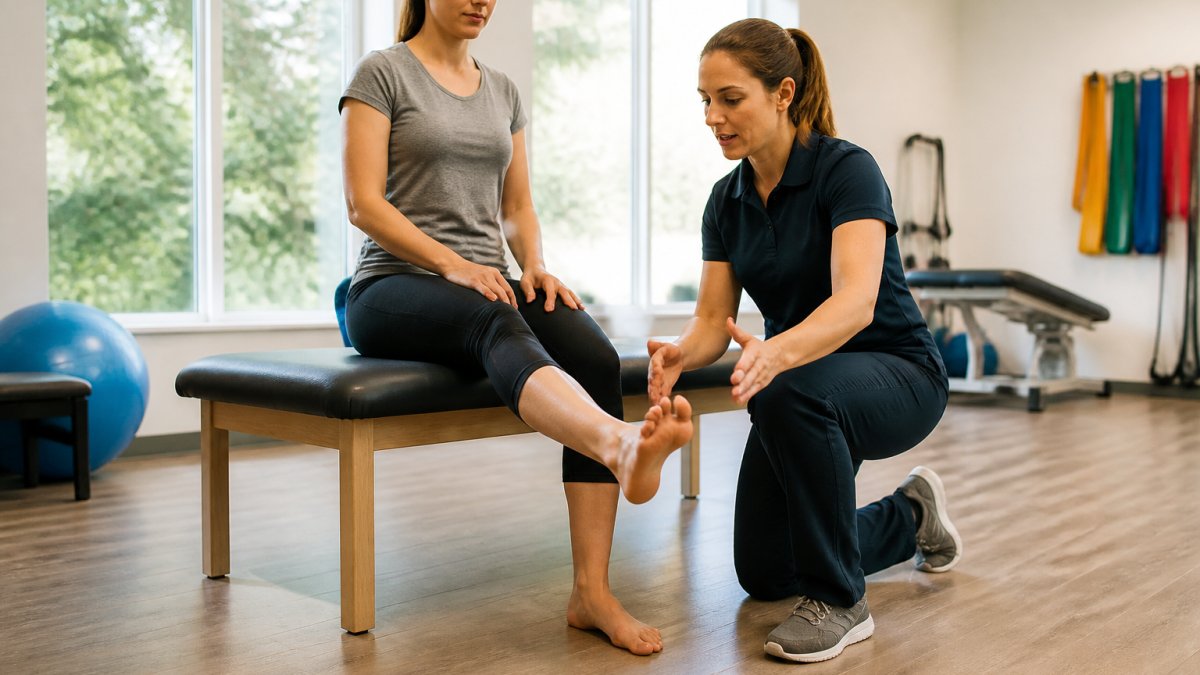
Ankle Pumps and Knee Bends: Simple Starts for Lower-Body Recovery
Ankle pumps and knee bends are the first rehab exercises most lower-body patients learn. They are low effort and low risk, which is why they are usually cleared within the first day or two after surgery, but only if your surgeon's orders allow it.
Ankle pumps
- Setup: Sit or lie with the leg supported and the knee relaxed.
- Movement: Point your toes down like pressing a gas pedal, then pull them back toward your shin. Move only at the ankle; keep the knee still.
- Dosage: 10 to 20 reps per set, 3 to 5 sets spread across the day. Most patients do a set every waking hour for the first few days.
- Common mistake: Pumping fast and hard. Slow, full-range pumps move blood more effectively than rapid flicks.
Knee bends (seated or supine)
- Setup: Sit on a sturdy chair with feet flat, or lie on your back with a small towel roll under the heel.
- Movement: Slowly slide the heel toward your body, bending the knee as far as comfort allows. Hold 2 to 3 seconds at the end range, then straighten slowly.
- Dosage: 10 reps per set, 3 sets, 2 to 3 times daily.
- Common mistake: Letting the leg drop or snapping it straight. Control the return.
These moves keep blood moving and fight stiffness. Stop if you feel sharp pain, not mild stretch.
Heel Slides and Hip Abduction: Regaining Joint Movement
Heel slides and hip abduction build on the basics. Heel slides target knee flexion; hip abduction works the outer hip and glute medius, which matters for walking stability.
Heel slides
- Setup: Lie on your back with legs straight. A slick surface or a plastic bag under the heel reduces friction.
- Movement: Slide the heel toward your buttocks, bending the knee. Keep the heel on the surface. Hold 5 seconds at the point of mild stretch, then slide back.
- Dosage: 10 reps, 2 to 3 sets, twice daily.
- Common mistake: Lifting the heel off the bed, which recruits the hip and cheats the knee.
Hip abduction (side-lying)
- Setup: Lie on your side with the bottom leg bent for stability and the top leg straight. Keep hips stacked.
- Movement: Lift the top leg 8 to 12 inches, leading with the heel. Lower slowly over 3 seconds.
- Dosage: 10 reps, 2 sets, once or twice daily.
- Common mistake: Rolling the hip backward and letting the leg drift forward. Keep the toes pointing straight ahead.
Keep movements slow and controlled. A common mistake is rushing reps and losing form.
Here are the starting range of motion exercises, with their setup, dosage, and the mistake to avoid.
| Exercise | Setup | Dosage | Common mistake |
|---|---|---|---|
| Ankle pumps | Sit or lie with leg supported, knee relaxed | 10 to 20 reps per set, 3 to 5 sets daily | Pumping fast and hard |
| Knee bends | Sturdy chair with feet flat, or on back with towel roll | 10 reps per set, 3 sets, 2 to 3 times daily | Letting the leg drop or snapping it straight |
| Heel slides | On back, slick surface or plastic bag under heel | 10 reps, 2 to 3 sets, twice daily | Lifting the heel off the bed |
| Hip abduction (side-lying) | On side, bottom leg bent, hips stacked | 10 reps, 2 sets, once or twice daily | Rolling the hip backward, leg drifting forward |
Post-Surgery Mobility Exercises: Walking and Gradual Activity Progression
Post-surgery mobility exercises come next, and walking is the anchor. Walking is a mobility exercise that restores gait, circulation, and confidence. Start with short, frequent walks rather than one long one. Use your assistive device as directed and increase distance gradually.
Fear can hold people back here. If anxiety about movement is slowing you down, our guide on overcoming fear of movement after injury walks through practical ways to rebuild trust in your body. Progress one variable at a time: distance, then pace, then terrain.
Post-Surgery Strengthening Exercises: Building Back Muscle and Stability
Post-surgery strengthening exercises rebuild muscle and stability once motion and mobility are underway. Strength work comes after range of motion and walking, not before. Your therapist decides when you are ready.
- Start with body-weight or band resistance
- Keep reps controlled, never jerky
- Add load only when the current level feels easy
A common mistake is adding weight too soon. That invites setbacks.
Click Here To Download Patient Information →
Leg Extension and Targeted Stretches for Joint-Specific Rehab
Leg extension and targeted stretches are joint-specific rehab exercises. Leg extensions rebuild the quadriceps after knee surgery; targeted stretches restore flexibility around the joint.
- Leg extension: Seated, straighten the knee slowly, hold 2 seconds, lower.
- Targeted stretches: Gentle hamstring and calf stretches, held 20 to 30 seconds.
For shoulder or rotator cuff cases, your therapist swaps in pendulum swings and assisted range of motion. For abdominal surgery, expect breathing and core activation work first.
How Long to Do Physical Therapy After Surgery: Setting a Realistic Timeline
How long to do physical therapy after surgery depends on the procedure, your baseline, and how you heal. There is no single answer. Some patients need a few weeks; others need several months. Your surgeon and therapist set the timeline together.
If progress feels slower than expected, read why physical therapy progress feels stalled before assuming something is wrong. Recovery is rarely a straight line.
Monitoring Pain, Fatigue, and Swelling: Your Safety Stop Signs
Monitoring pain, fatigue, and swelling is how you stay safe between visits. Most practitioners find that patients who track symptoms daily progress faster, because they catch flares before they become setbacks. The trick is knowing what is expected and what is not.
Expected vs. concerning: how to tell the difference
Expected after exercise
- Mild soreness that peaks 24 to 48 hours later and fades within a day
- Swelling that increases slightly during activity and settles with elevation overnight
- Fatigue that improves after a rest period or a night's sleep
Concerning, reduce activity and call your clinician
- Sharp or increasing pain during a movement, or pain that keeps worsening over several sessions
- Swelling that grows after exercise and does not settle with elevation, or swelling that is new and rapid
- New numbness, tingling, or weakness in the limb
- Fatigue that lingers for a day or more, or a sudden drop in energy
- Fever, chills, wound redness, warmth, drainage, or opening at the incision
- Shortness of breath, chest pain, or calf pain and swelling, seek urgent care
Simple ways to measure at home
- Swelling: Measure the joint's circumference with a tape measure at the same landmark each morning before exercise. A jump of more than about half an inch that does not settle is a signal to back off.
- Pain: Rate it 0 to 10 before, during, and after exercise. A common pattern is soreness that stays at or below 3 out of 10 and returns to baseline within an hour.
- Fatigue: Note whether you needed an extra rest day. Two or more unplanned rest days in a week usually means the dose is too high.
Adapting Exercises to Different Surgeries and Restrictions
Adapting exercises to different surgeries and restrictions is where expert guidance earns its keep. A knee replacement, a rotator cuff repair, and an abdominal procedure each carry different precautions.
- Knee replacement: progress range of motion and strength steadily, watch swelling
- Rotator cuff repair: protect the repair early, follow sling and lifting limits
- Abdominal surgery: start with breathing and core activation, avoid heavy straining
Never copy a program from someone with a different procedure. Restrictions are procedure-specific.
Setting Up Your Home Exercise Space for Success
Setting up a home exercise space makes daily rehab exercises easier to keep up. You do not need a gym.
- A clear floor area with a mat
- A sturdy chair with armrests
- A resistance band and a small step
- Good lighting and a water bottle nearby
Keep your exercise handouts visible. Log your reps and walking minutes so your therapist can adjust your plan.
Next Step: Schedule Your Post-Surgical Rehab Evaluation
The hardest part of recovery is often starting structured rehab with the right guidance. At ABC Physical Therapy Cares, we treat one patient at a time, so you get real one-on-one attention. Our licensed therapists use advanced manual therapy techniques, including myofascial release and joint mobilization. We accept all insurances, including no-fault and worker's comp. Curious how focused care speeds recovery? Read the benefits of one-on-one therapy, then use our guide to book a physical therapy appointment online.
Frequently Asked Questions
Which exercises are safe after surgery?
Safe exercises depend on your procedure and your surgeon's restrictions. Generally, gentle range of motion exercises like ankle pumps and knee bends are started early, while strengthening exercises are added later. Always follow your physical therapist's guidance and stop if you feel sharp pain. A 2014 review noted that therapeutic exercise before and after major surgery may improve functional status and reduce complications, but individualization is key.
How often should I do rehabilitation exercises after surgery?
Most rehab exercises are performed several times a day, especially range of motion and mobility drills. Strengthening exercises are typically done 2-3 times per week with rest days in between. Your physical therapist will tailor the frequency to your recovery stage and surgical precautions. Consistency matters more than intensity, so short, frequent sessions often work best.
How do I know if I am overdoing it during post-surgical rehab?
Watch for increased pain, swelling, or fatigue that lasts longer than expected. If pain or swelling increases during an exercise, stop and rest. Persistent soreness that doesn't improve with rest may signal you're pushing too hard. Follow the stop signs your therapist provides, and never push through sharp pain. Adjusting dosage and technique with professional guidance helps you progress safely.
How long does it take to recover from major surgery?
Recovery timelines vary widely by procedure and individual. Minor surgeries may require a few weeks of rehab, while major joint replacements can take several months. Physical therapy duration often ranges from 6 to 12 weeks or more, depending on goals and complications. Your surgeon and physical therapist will outline a expected timeline and adjust it as you progress.